



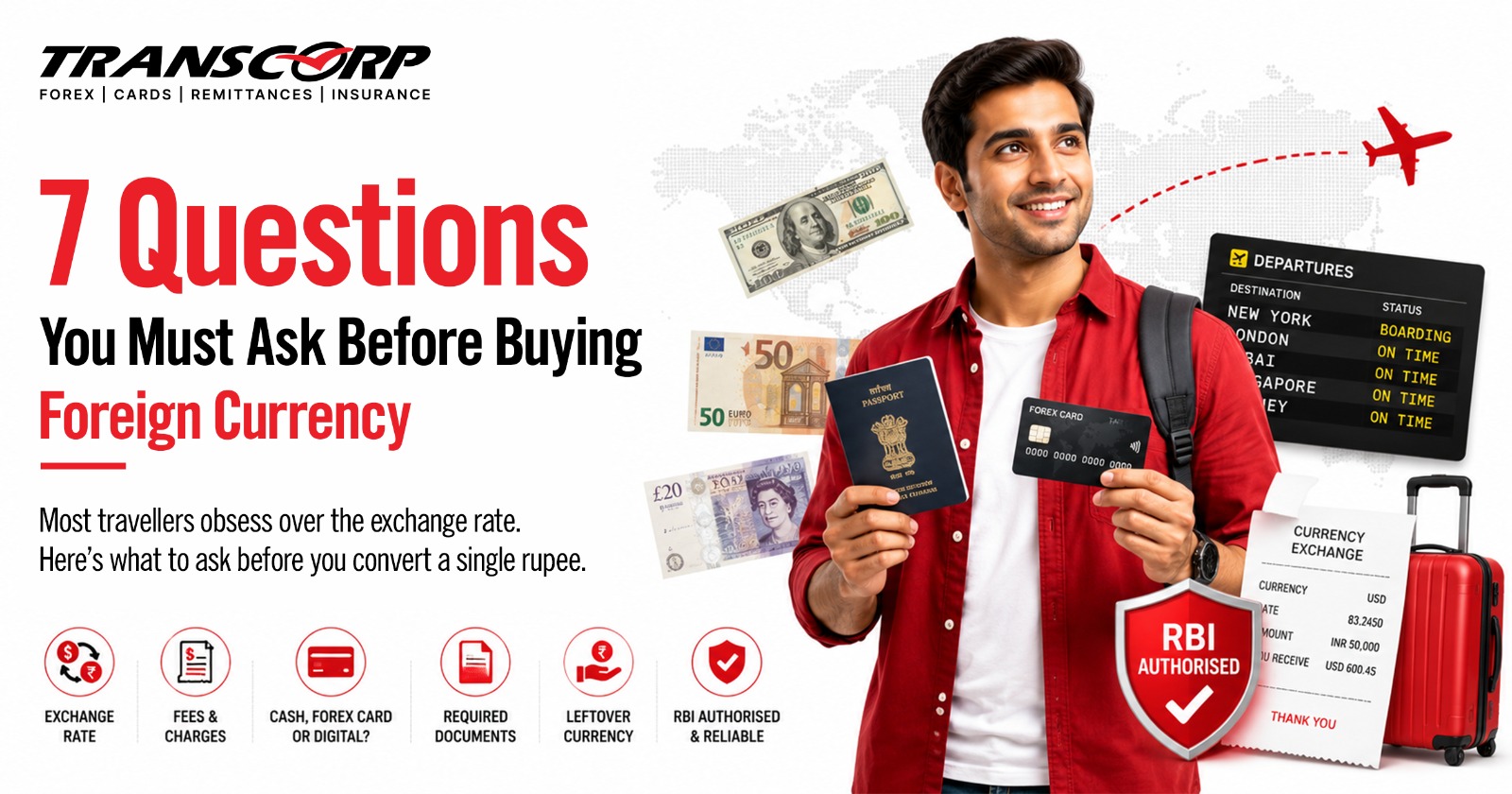
Most travellers obsess over the exchange rate — and miss everything else that quietly costs them money. Here’s what to ask before you convert a single rupee.
Planning an international trip? Whether you’re travelling for leisure, business, education, or medical purposes, buying foreign currency is a critical part of your preparation. Yet many travellers focus only on the exchange rate and overlook other factors that significantly impact total cost and convenience. Asking the right questions before your transaction can save money, eliminate hidden charges, and make your journey smoother from day one.
The 7 Essential Questions Every Traveller Should Ask
01 What is the exchange rate being offered?
The exchange rate directly determines how much foreign currency you receive for your money. Even a marginal difference in rates can have a meaningful impact on larger transactions — always compare rates across providers before committing.
Tip: Compare rates from at least 2–3 providers before deciding.
02 Are there any additional charges or fees?
A competitive exchange rate can be undermined by hidden transaction fees, service charges, or handling costs. Always ask for the total amount payable — not just the headline rate — to get a true picture of what you’re paying.
Tip: Ask for an all-in cost breakdown before signing anything.
03 How much foreign currency should I carry?
Carrying too much leaves you with unused currency after the trip. Too little creates stress abroad. Estimate your expenses by category — accommodation, food, transport, shopping — and plan accordingly. A combination of cash and card often works best.
Tip: Plan a mix of cash and travel cards for flexibility and safety.
04 What are the best options — cash, forex card, or digital payments?
Each payment method has trade-offs. Cash is universally accepted but carries risk. Forex cards offer security and locked-in rates. Digital payments are convenient but may not work everywhere. Diversifying across methods gives you both flexibility and a safety net.
Tip: Don’t rely on a single payment method for international travel.
05 What documents are required?
Foreign exchange transactions in India are regulated, and providers typically require documentation before processing. Having these ready avoids delays at the counter or during online transactions.
Tip: Typically required: Passport, Visa, Air Ticket, PAN Card, and supporting documents.
06 What should I do with leftover foreign currency after my trip?
Many travellers return home with unused currency and no clear plan. Understanding buy-back rates and policies before your trip — not after — helps you decide how much to carry and what to expect when converting back.
Tip: Ask about buy-back rates and timelines before your departure.
07 Is my currency exchange provider authorised and reliable?
Only authorised foreign exchange dealers regulated by the Reserve Bank of India (RBI) are legally permitted to carry out forex transactions. Using unauthorised providers puts your money at risk and can create legal complications.
Tip: Always verify your provider holds a valid RBI authorisation.
Quick Checklist Before Buying Foreign Currency
- Compare exchange rates across providers
- Understand all applicable charges and fees
- Estimate your travel expenses realistically
- Explore multiple payment options (cash, forex card, digital)
- Keep required documents ready and accessible
- Understand the provider’s currency buy-back policy
- Choose an RBI-authorised, trusted provider
Buying foreign currency is more than a transaction — it’s the first step in preparing for a smooth, stress-free international journey. The travellers who ask these questions before the trip are the ones who spend less time worrying about money once they’re abroad.
How Transcorp Can Support You
At Transcorp, we’re committed to helping customers make informed foreign exchange decisions through transparent processes, reliable services, and expert guidance tailored to your travel requirements. With over 30 years of experience and RBI authorization, we offer forex cash, travel cards, and outward remittance — all in one place.